

The Humbling Hobby

Apparently, woodworking comes with unsolicited character development.
I just didn’t expect it to come from an old coffee table acting like a tiny wooden therapist.
I started this hobby thinking it would just be something fun to learn.
A practical skill.
A creative outlet.
Maybe even a way to make old furniture beautiful again.
I thought I was restoring furniture.
Meanwhile, a random Ethan Allen table from a garage sale was busy restoring my humility.
And apparently, refurbishing furniture is one giant life metaphor.
And a rude one sometimes.
The first thing woodworking taught me was patience.
You cannot rush stain. You cannot rush drying time. You cannot rush paint cure times. And if you do?
The furniture immediately punishes your confidence.
You touch it too early and leave fingerprints.
You add another coat too soon, and it gets tacky.
You skip prep work, and suddenly your finish looks like regret.
And the frustrating part is… life works like that, too.
Some things genuinely cannot be forced without making them worse.
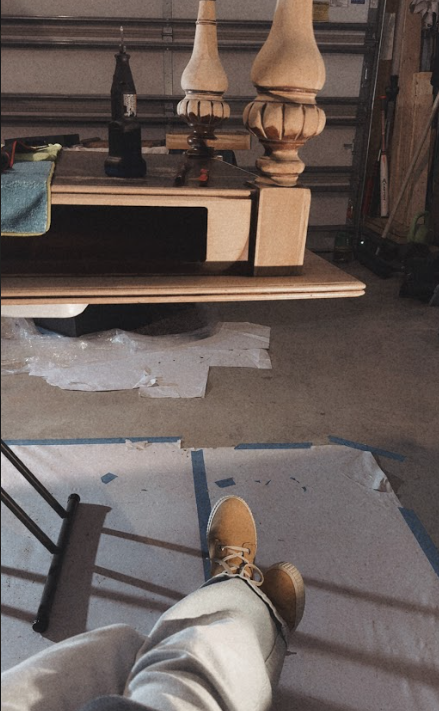
Healing. Relationships. Growth. Trust. Parenting. Learning. Even ourselves.
I am a "fix it immediately" type of person.
Woodworking does not care. The wood will humble you either way.
Speaking of being humbled — woodworking taught me very quickly that progress and mastery are not the same thing.
You can improve and still mess things up.
You can learn and still make mistakes.
You can care deeply and still not get perfect results every time.
Because the next minute you could be standing in your garage staring at a blotchy stain, uneven sanding, or a paint drip you somehow didn't notice until it dried permanently into the surface, making you feel personally attacked.
Woodworking has a way of reminding you that watching tutorials and actually doing something are two completely different things.
We live in a world where everyone wants to look naturally talented immediately. Nobody wants to be seen learning. Nobody wants to make beginner mistakes publicly.
But refinishing furniture forces you to become okay with messing up.
You learn by doing.
Not by overthinking.
Not by researching for 14 hours straight.
Or by waiting until you magically feel ready.
At some point, you just have to touch the furniture.
That lesson alone hit me harder than expected.
Then there’s the fact that woodworking taught me that most mistakes are fixable.
That one surprised me the most.
Because the first time you gouge wood, drip stain, sand unevenly, or completely question your life choices halfway through a project, it feels ruined.
But then you learn:
You can wood fill it.
Sand it back down.
Try again.
Pivot.
Redo it.
Adjust.
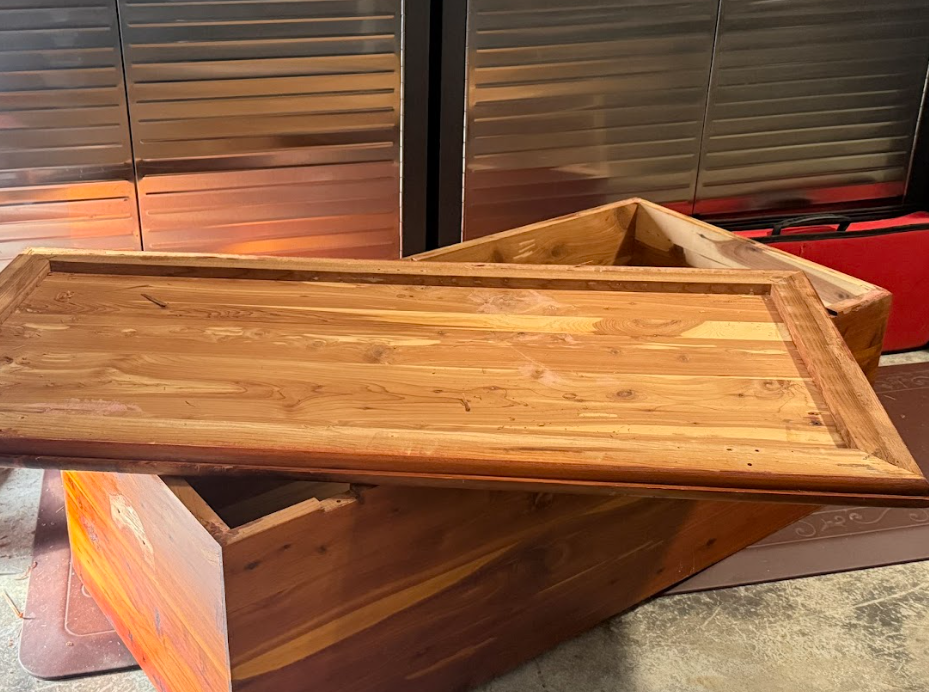
And suddenly you realize how often we treat ourselves differently from the way we treat projects.
We assume our mistakes permanently define us.
Meanwhile, I'm over here giving furniture second, third, and fourth chances while being hard on myself for being human once.
There's probably a lesson in that.
Actually… there definitely is.
Another thing refinishing taught me is that preparation matters more than talent.
The cleaning.
The prep.
The sanding.
The taping.
The invisible work nobody compliments.
That’s what determines the outcome most of the time.
And isn’t that true for almost everything?
Strong relationships are built in the little daily things.
Confidence is built quietly.
Trust is built slowly.
Healing is built underneath the surface before anyone else can see it.
People love the dramatic "before and after."
But the transformation usually happens in the boring middle.
The middle matters.
And maybe my favorite lesson of all:
Sometimes the answer is to stop touching it and leave it alone.
Listen. Overworking furniture is REAL.
Too much sanding ruins it.
Too much stain muddies it.
Too much paint hides its character.
Too much fixing creates new problems.

Sometimes the best thing you can do is step away and let it breathe.
I think people do this to themselves, too.
We overanalyze.
Overcorrect.
Overreact.
Overwork.
Overfix.
Sometimes growth is knowing when to stop forcing things.
And finally, woodworking gave me a new respect for craftsmanship.
Older furniture, especially.
You start noticing the details:
Solid wood.
Dovetail joints.
Hand carving.
The patience it took to build something meant to last.
And in a world where almost everything feels disposable now, there’s something emotional about that.
It reminds me that the strongest things usually take the longest to build.
Furniture.
Trust.
Character.
Families.
Healing.
People.
None of it is fast.
And that is definitely okay.
So yes — technically, I started refinishing furniture to learn refinishing, refurbishing, and woodworking.
But somewhere between the sanding dust, the stain rags, the accidental mistakes, and me standing in my garage questioning every decision I’ve ever made…
…I realized this hobby was teaching me a whole lot more than how to restore furniture.

It’s teaching me patience.
Humility.
Resilience.
Restraint.
Problem-solving.
And how to keep going even after messing something up.
Turns out, refinishing furniture is basically therapy.
Not because it fixes everything — but because it reminds you that beautiful things are often rebuilt slowly.